Periodic health and safety training in Poland: how often
Knowledge5 min read
Polish deadlines for periodic health and safety (BHP) training by job group in one table, with the legal basis and answers to common questions.
 Łukasz Kamiński4 min read
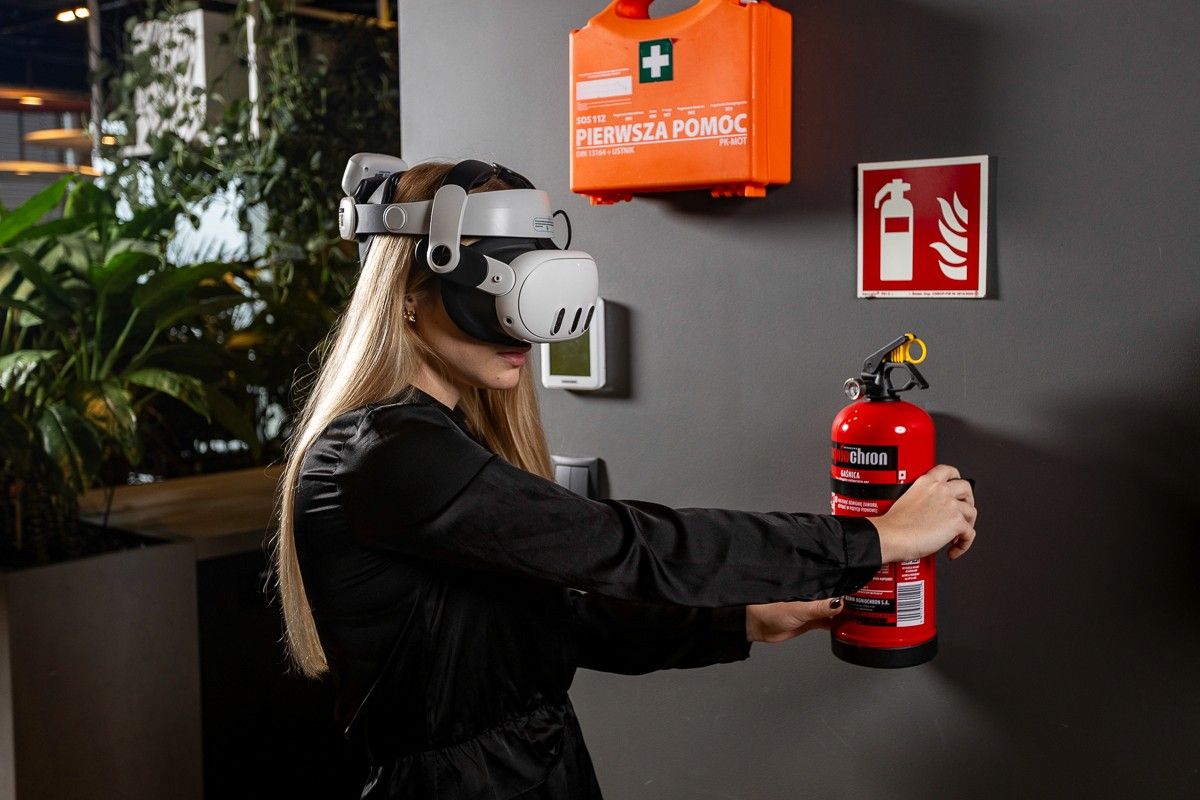
Fire safety training for employees means familiarising them with fire safety rules, with the building’s fire safety instructions and with what to do when a fire breaks out: how to raise the alarm, when to fight the fire, how to use an extinguisher and how to evacuate. It works best when every participant performs these steps themselves at least once, rather than only hearing about them.
This article describes the rules that apply in Poland. If you operate elsewhere, check your local requirements; the content of a good training session is largely the same.
The rules cited above do not set a single repeat interval for fire safety training of all employees, as the health and safety regulation does for periodic training. How employees are familiarised with the rules is set out in the building’s fire safety instructions, and fire topics come back at every periodic health and safety training. The practical evacuation check, however, has a fixed interval: at least every 2 years in buildings covered by § 17 of the regulation.
Practice is the hardest part to organise. Fighting a real fire needs a safe place, an instructor and extinguishers that then have to be refilled, so usually a few people practise while the rest watch.
In a VR headset every participant puts out the fire themselves, in a training room or a corridor, with no flames, smoke or clean-up. They can repeat the scenario until they act with confidence, and you can see how they did. Apps that fit fire safety training:
You will find all fire training apps in the Fire safety VR training category. VR does not replace handling a real extinguisher or a real evacuation drill in your building. It does let all your employees practise the fire itself, not just a few volunteers.
The price of fire safety training depends mainly on:
With VR you pay for headsets, not per person, so the cost does not grow with every extra participant. Plans and pricing are described in pricing for business. For a one-off event you can also rent headsets with the apps.
Want to see how your employees handle an extinguisher in VR? Request headsets for a free trial.
Knowledge5 min read
Polish deadlines for periodic health and safety (BHP) training by job group in one table, with the legal basis and answers to common questions.

Knowledge3 min read
An overview of Poland’s Civil Protection and Civil Defense Act and how EHS VR uses virtual reality to train citizens and institutions for emergencies.
Knowledge2 min read
Hesitant about VR for business? We answer the most common concerns about cost, security, deployment and content.
We send you a headset with all the apps. You test for 5 business days, and we cover shipping both ways.
Get a test headsetInstall in a few minutes and test all the apps for 7 days. No card, no commitment.
Test on my headsets30 minutes online: we show you scenarios for your industry and answer your questions about rollout.
Book a callWant to see prices first? Pricing for business