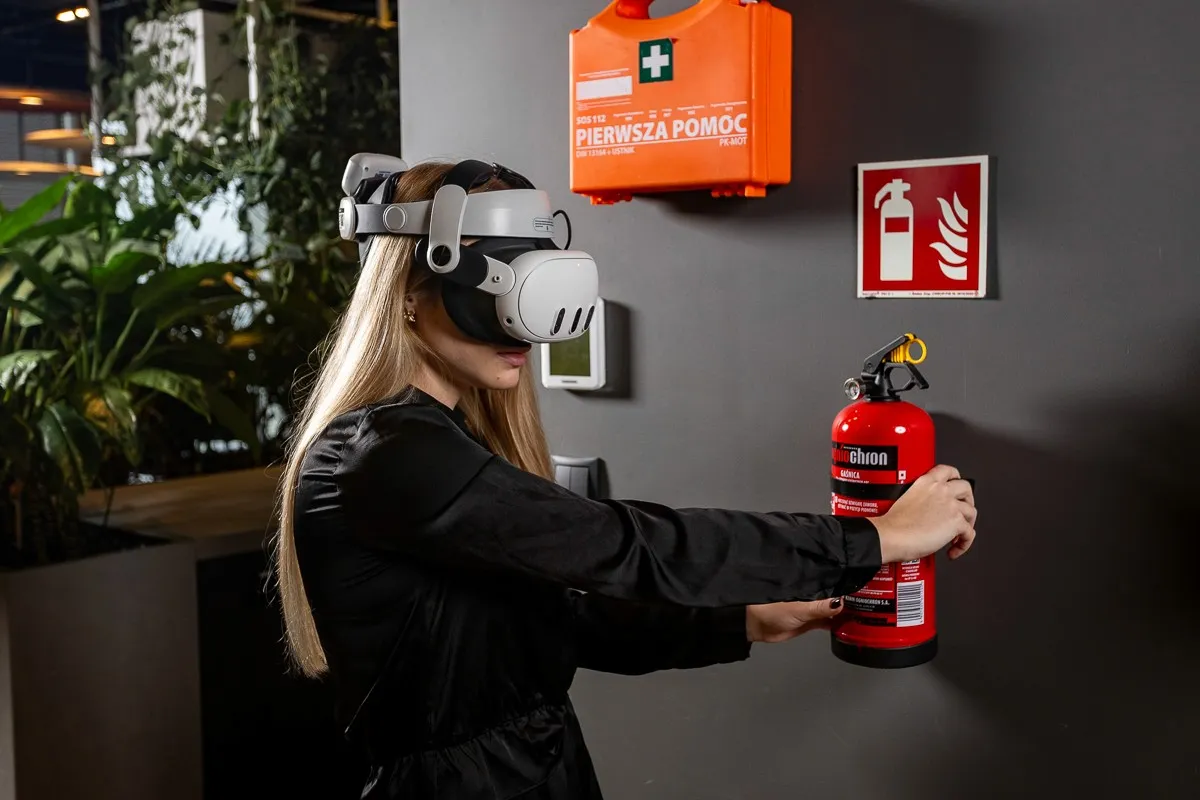
Fire safety training for employees: what it should include
Knowledge4 min read
What Polish law says about fire safety training for employees, what is worth practising and how to add fire extinguisher practice without real fire.
 Łukasz Kamiński5 min read
If you employ people in Poland, periodic health and safety (BHP) training is required every 3 years for manual (blue-collar) positions, every year where particularly hazardous work is done, every 5 years for employers, managers, engineering staff and OHS staff, and every 6 years for administrative and office staff. The first periodic training must take place within 12 months of starting work in a position, or within 6 months for managerial positions.
These periods come from § 15 of the Regulation of the Minister of Economy and Labour of 27 July 2004 on health and safety training (Journal of Laws 2004 No. 180, item 1860, amended in 2005 and 2007). The employer’s duty to run periodic training comes from Article 237³ § 2 of the Polish Labour Code.
| Job group | How often (at least) | First periodic training | Form |
|---|---|---|---|
| Manual (blue-collar) positions | every 3 years | within 12 months of starting in the position | instruction (instruktaż) |
| Manual positions with particularly hazardous work | every year | within 12 months | instruction |
| Employers and others who manage employees (managers, foremen, supervisors) | every 5 years | within 6 months | course, seminar or guided self-study |
| Engineering and technical staff (designers, machine builders, technologists, production planners) | every 5 years | within 12 months | course, seminar or guided self-study |
| OHS service staff and people performing its tasks | every 5 years | within 12 months | course, seminar or guided self-study |
| Administrative and office staff | every 6 years | within 12 months | course, seminar or guided self-study |
Source: § 14(2) and § 15(1), (2) and (4) of the Regulation, as amended by Journal of Laws 2005 No. 116, item 972 and 2007 No. 196, item 1420.
These are maximum intervals. After consulting employees or their representatives, the employer sets the frequency and duration of periodic training for specific positions, taking into account the type and conditions of the work (§ 15(3)). Training can therefore be more frequent than the minimum.
The Labour Code (Article 237³ § 2²) exempts administrative and office staff from periodic training if the employer’s main activity belongs to a group with an accident insurance risk category no higher than three, unless the occupational risk assessment shows that training is needed.
If the risk category rises above three, or the risk assessment shows a need for training, it must be carried out within 6 months (Article 237³ § 2³ and § 2⁴).
It depends on the position: manual positions every 3 years (particularly hazardous work every year), employers, managers, engineering staff and OHS staff every 5 years, administrative and office staff every 6 years.
Within 12 months of starting work in a given position. Employers and people who manage employees have 6 months (§ 15(4)).
A person can be exempted from the first periodic training if they present a valid certificate of the required periodic training completed with another employer within that period. They can also be exempted if they completed periodic training for a different job group whose programme covered the scope required in the new position (§ 15(5)).
As a rule, yes, every 6 years. They do not when the employer’s main activity has a risk category no higher than three, unless the risk assessment says otherwise (Article 237³ § 2² of the Labour Code).
Yes. The Regulation sets minimum intervals (“at least every…”), and the employer sets the frequency for specific positions after consulting employees (§ 15(3)).
No. Health and safety training takes place during working hours and at the employer’s expense (Article 237³ § 3 of the Labour Code).
Periodic training often ends with slides and a signature on an attendance list. Yet the framework programme explicitly covers what to do in an accident, a fire or a breakdown: situations that most workplaces cannot safely rehearse for real.
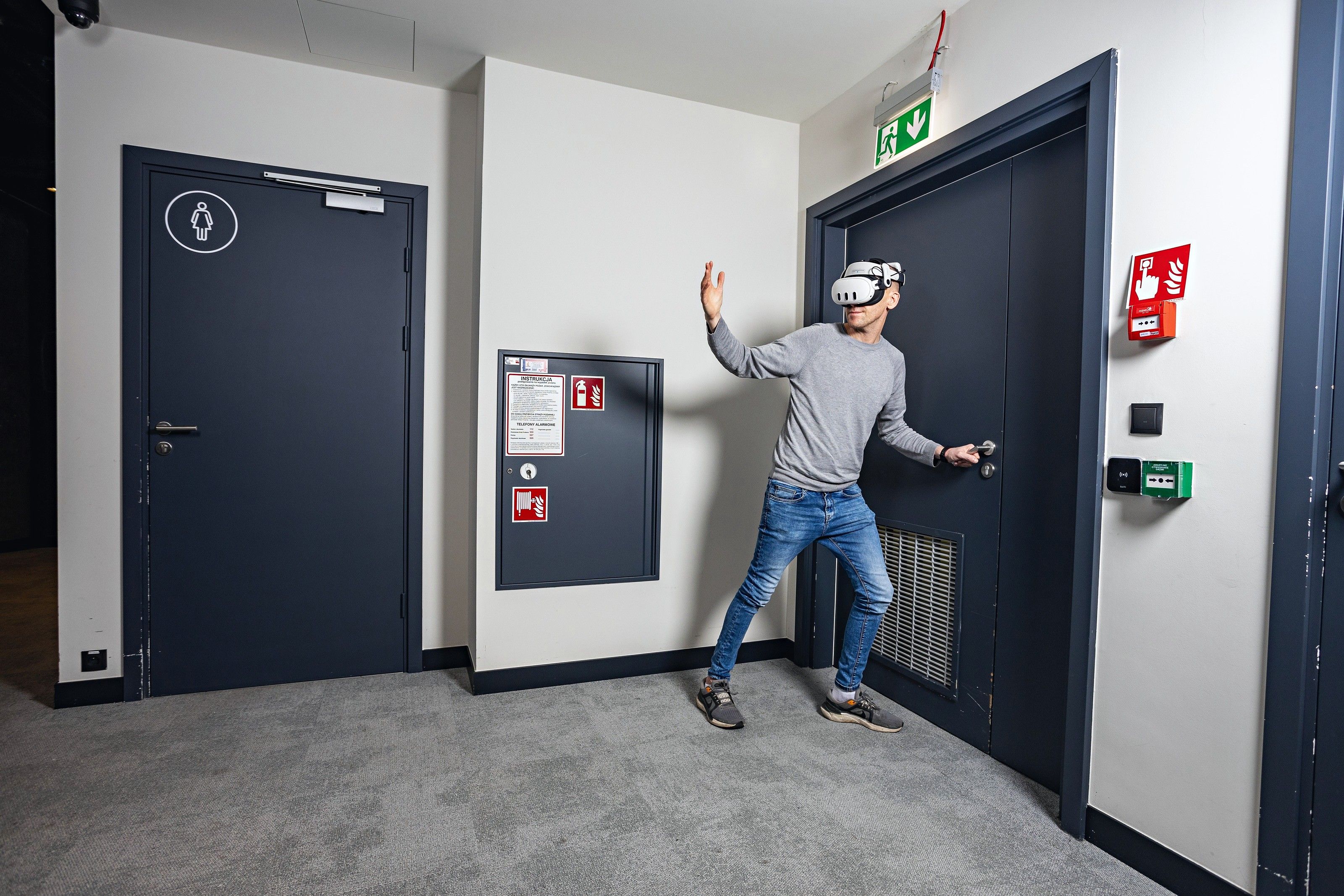
This is where a short practice session in a VR headset helps, built into the instruction or right after it. Each participant performs the procedure themselves and can repeat it until they act with confidence:
VR does not replace the theory or the exam. It adds what a typical session lacks most: the moment when the employee does what they have just heard about. Read more about running periodic training this way on Refresher training.
Want to try it with your team? Request headsets for a free trial.
Knowledge4 min read
What Polish law says about fire safety training for employees, what is worth practising and how to add fire extinguisher practice without real fire.

Knowledge3 min read
An overview of Poland’s Civil Protection and Civil Defense Act and how EHS VR uses virtual reality to train citizens and institutions for emergencies.

Knowledge2 min read
Hesitant about VR for business? We answer the most common concerns about cost, security, deployment and content.
We send you a headset with all the apps. You test for 5 business days, and we cover shipping both ways.
Get a test headsetInstall in a few minutes and test all the apps for 7 days. No card, no commitment.
Test on my headsets30 minutes online: we show you scenarios for your industry and answer your questions about rollout.
Book a callWant to see prices first? Pricing for business